Ubunya vs Coursera
Coursera is for universities and big brands. Ubunya is for every training organisation.
Coursera publishes courses, certificates and degrees from universities and companies such as Google and IBM, and sells them to learners individually or through Coursera Plus, about $59 a month or $399 a year in the US. Most training organisations can't publish there at all. Ubunya lets any academy, NGO or training business run its own programmes, with admissions, live cohorts, attendance, fees and certificates under its own name.
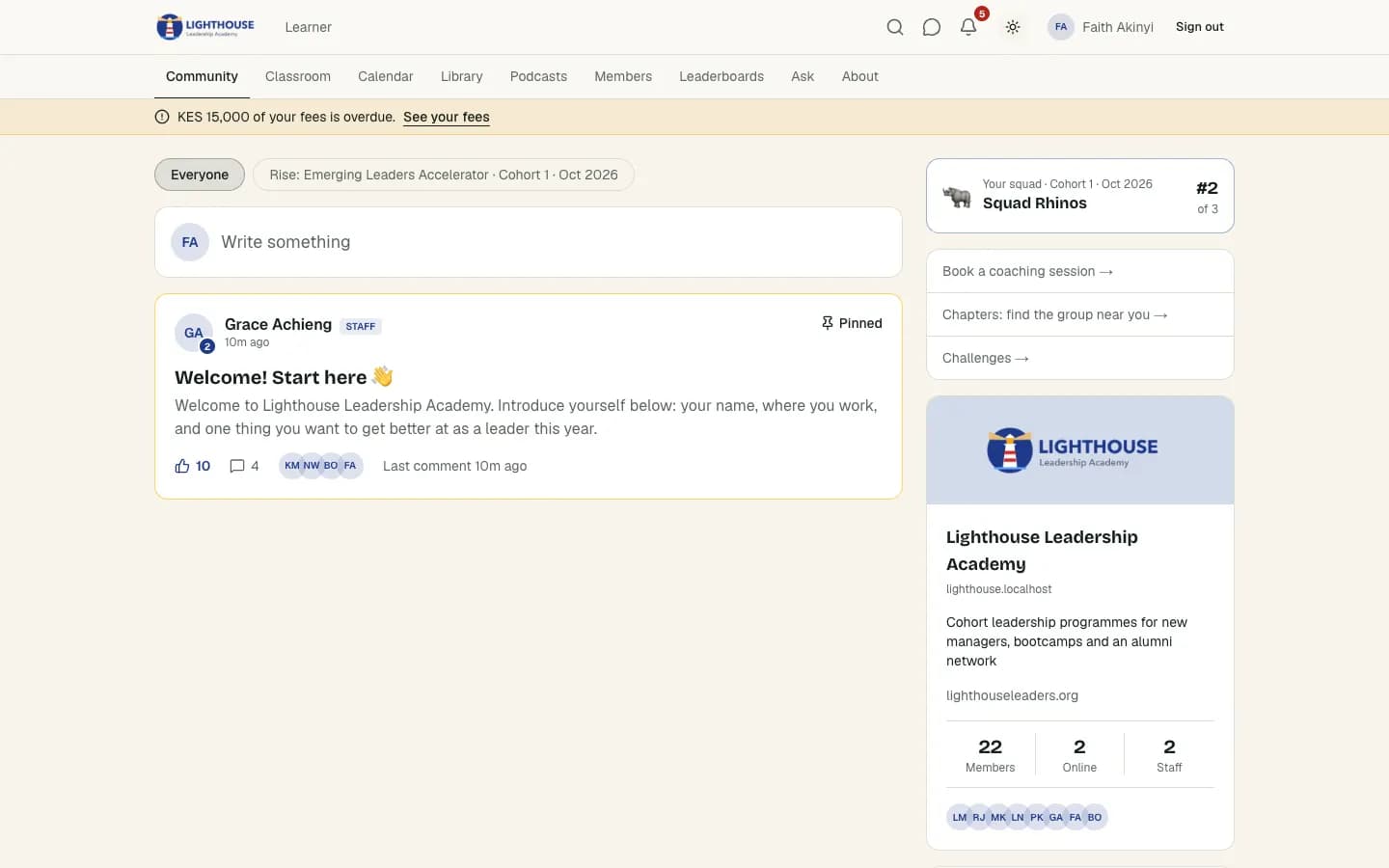
The short answer
Choose Coursera if
- You're a university or a large company invited as a Coursera partner.
- You want your course in a global catalogue next to university brands.
- Self-paced courses and online certificates are the product.
Choose Ubunya if
- You're an academy, NGO or training business, not a university partner.
- Your programmes run as cohorts with live and in-person sessions.
- Learners pay you, by bank, mobile money, card or an employer.
- You want your own community and alumni network.
Coursera and Ubunya at a glance
- Who can teach
- Coursera: Universities and company partners
- Ubunya: Any training organisation
- Learner price
- Coursera: Coursera Plus about $59/month or $399/year (US), or per course
- Ubunya: Whatever you charge
- Price to you
- Coursera: Partnership agreement
- Ubunya: One plan agreed with you, paid by invoice in your currency. Every feature is included.
- Whose brand
- Coursera: Coursera alongside the partner's
- Ubunya: Yours
Feature by feature
| Feature | Ubunya | Coursera |
|---|---|---|
| Community feed, categories and polls | Course discussion forums | |
| Courses, lessons and progress | Courses, certificates and degrees | |
| Points, levels and leaderboards | ||
| Live sessions | Live rooms in the browser, with breakout groups and recording | Some degree programmes |
| Admissions | Application forms with a review queue | Degree admissions only |
| Cohorts | Intakes with seats, dates and class times | Session dates on some courses |
| Attendance | Online and in person, with QR check-in | |
| Certificates | Issued on completion, with a public check page | Course and professional certificates |
| Small groups | Squads inside each cohort | |
| Impact reporting | Impact reports and follow-up surveys | Partner dashboards |
| Payments made outside a card checkout | Bank transfer, M-Pesa, UPI, Pix, card and cash recorded, with receipts and balances | Coursera's checkout only |
| One payer for many learners | An employer or sponsor pays for several learners | Coursera for Business, sold by Coursera |
| WhatsApp and SMS | WhatsApp and SMS reminders and announcements | |
| Email broadcasts and automatic sequences | Course reminders | |
| Phone app | Installable app under your own name and logo | Coursera's app |
| Web address | ubunya.com/yourname, or your own domain | A page on coursera.org |
| Developer access | Public API, MCP server and CLI | |
| Fee on what learners pay | 0% | Partnership revenue share |
Coursera details as of November 2026, from Coursera Plus, S&P Global: Coursera's Udemy deal and published reviews. Prices and fees change, so check Coursera's site before you decide.
A catalogue for big names, or a home for your programmes
Coursera's catalogue carries university and company brands, which is why learners trust its certificates. Publishing is by partnership, so a typical academy, coaching business or NGO can't put its programme there. Learners pay Coursera, by course, by certificate or through Coursera Plus.
In 2026 Coursera agreed to combine with Udemy, bringing the two biggest course marketplaces together with a focus on companies buying training for staff.
Ubunya is for everyone else: you run your own programmes, admit your own learners, take attendance at live and in-person sessions, record fees however they're paid and issue your own certificates with a public check page.
Cohorts, not just a membership
Most Coursera courses are self-paced, with optional deadlines. Ubunya starts from the programme: you open an intake with a start date, seats and class times, people apply, your team admits them, and they move through the cohort together until graduation.
Every learner has a record that follows them: which intake they joined, which sessions they attended, what they paid and which certificate they earned. When a funder or board asks how the last cohort went, the answer is already there.
If you only need an open membership that anyone can join with a card, Coursera may be all you need. If you admit people into programmes that start and finish, that structure is what Ubunya is for.
Attendance and certificates that prove the work
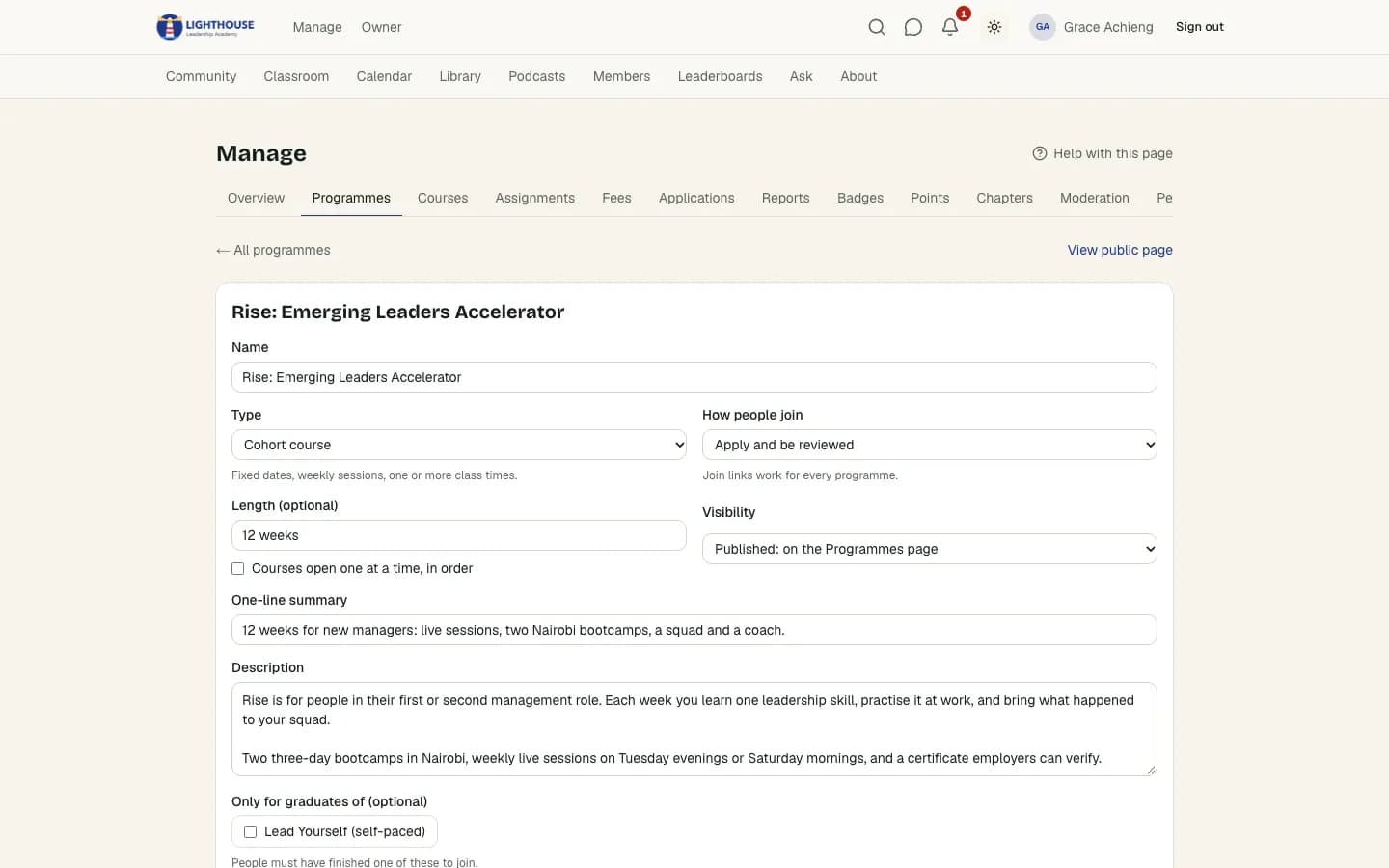
Coursera tracks quiz and assignment completion, not attendance at live or in-person sessions. In Ubunya, people who join a live session are marked present automatically, and for in-person days staff can tick a register or learners can scan a QR code at the door, even on a weak connection.
Completion rules can require attendance as well as lessons. When a learner finishes, their certificate is issued with a public check page, so an employer can confirm it is genuine.
Where Coursera is the better choice
No platform suits everyone. Coursera does these things better than Ubunya:
- University and company brands that learners trust.
- A global catalogue with huge reach.
- Accredited degrees and professional certificates.
Moving from Coursera to Ubunya
- Request a community. We set it up with your name, logo and colours, at ubunya.com/yourname or on your own domain.
- Import your members from a CSV export, with their names, emails and phone numbers.
- Recreate your programmes and courses. Lesson videos can be uploaded or embedded, and we can help with the move when we agree your plan.
- Invite members to sign in. Their history starts in Ubunya from the next intake.
Questions
How much does Coursera Plus cost?+
In the US, Coursera Plus is about $59 a month or $399 a year, with frequent promotional discounts on the annual plan. Prices vary by country; check coursera.org for current offers.
Can anyone teach on Coursera?+
No. Coursera publishes courses from partner universities and companies. Independent academies and trainers usually can't publish there, which is where Ubunya fits.
Coursera or Ubunya: which should I choose?+
As a learner, Coursera is a great catalogue. As a training organisation running your own programmes, Ubunya gives you admissions, cohorts, attendance, fees and certificates under your own name.
Other comparisons
Bring your next cohort to Ubunya
Request a community today. We review every request by hand.